We may earn a commission from purchases or bookings through the links below.
Colonia del Sacramento does not need a packed itinerary to justify an overnight bag. Its appeal is smaller: looking at a street until you notice how it drains, choosing one museum instead of collecting admission tickets, and leaving room for the river.
The historic quarter sits on a peninsula in Uruguay, facing Buenos Aires across the Río de la Plata. It is a place to consider when you want a compact heritage stop with time between activities. Our recommendation is one night if that pace appeals; a day visit remains a sensible choice if you mainly want an introduction.
Look down as well as up
UNESCO's World Heritage listing dates the Portuguese foundation to 1680 and the quarter's inscription to 1995. Its significance lies in the meeting of Portuguese, Spanish and later architectural traditions, rather than one spectacular monument.
UNESCO also draws attention to the irregular street plan, shaped by the terrain and military needs, and the predominantly low buildings. That gives you something specific to look for: how a lane bends, where it opens into a square and how the water enters the view.
The local tourism authority offers a particularly good detail. It associates streets draining down the middle with the Portuguese period, and those draining at the sides with the Spanish. A drainage channel is an unusually modest history lesson, and a useful antidote to photographing only doors.
Choose a museum by the question you want answered
Colonia's official museum guide describes several different lenses on the place. The Museo del Azulejo focuses on decorative tiles; the Museo Indígena holds pre-Columbian material from the region; the Museo Naval addresses the peninsula's strategic role.
Pick the subject that interests you, then confirm current opening arrangements before fixing the day around it. Tiles make a natural follow-up to looking at houses. Indigenous collections widen the story beyond the European powers that dominate the street-level narrative. Naval history helps explain why the position on the river mattered.
We would build the first visit around one museum, with a second as an option. This is an editorial selection by subject, not a ranking of collections, and no ticket price or universal museum opening schedule is assumed.
What the extra night buys
A day visit suits a traveller who wants the streets, a meal and one cultural stop. An overnight stay suits someone who dislikes having every pause measured against a return departure.
The Uruguayan National Commission for UNESCO likewise notes that the quarter can be visited in a day while recommending a night for a more relaxed experience. Our version keeps the extra time deliberately unfilled: an afternoon introduction, an unhurried meal, then a second look the next morning.
Before adding the hotel, compare the actual arrival and departure times available on your dates. Include the transport operator's required check-in time, not just the departure printed on the ticket. An overnight stop is worthwhile when it improves the time you have on the ground; it is not automatically better if it creates awkward connections elsewhere.
Book for the approach, not just the address
The national commission describes the historic site as only partially accessible, with cobbled streets potentially difficult for wheelchair users. That matters for wheeled luggage too.
Before booking, ask a property about the route from the nearest vehicle drop-off, entrance steps, the room's floor and any lift. A map pin inside the quarter cannot answer those questions. If walking on uneven surfaces is difficult, ask the local tourism office for help choosing a manageable route and appropriate transport.
Compare accommodation in Colonia del Sacramento, then check the specific property's access details directly. The official tourism portal lists its historic-quarter information office at Manuel Lobo 224.
Fit Colonia into the wider trip
The national commission lists bus connections from Montevideo's Tres Cruces terminal and boat arrivals from Buenos Aires. Check current schedules and, for an international crossing, the documentation required for your nationality. This guide does not quote ferry availability or promise a connection.
For a different Uruguayan city experience, our Montevideo Ciudad Vieja guide centres on art and a daytime market lunch. Keep the two stops distinct: Colonia's reason to linger is its intimate scale and architectural detail.
Research checked 16 October 2026. Canada's Uruguay advisory advised normal security precautions nationally, with a higher caution level for Montevideo; it also identifies seasonal petty-crime risks in Colonia. Keep valuables discreet. Consult INUMET and your transport operator before a river crossing or waterfront outing, and adjust plans to conditions.
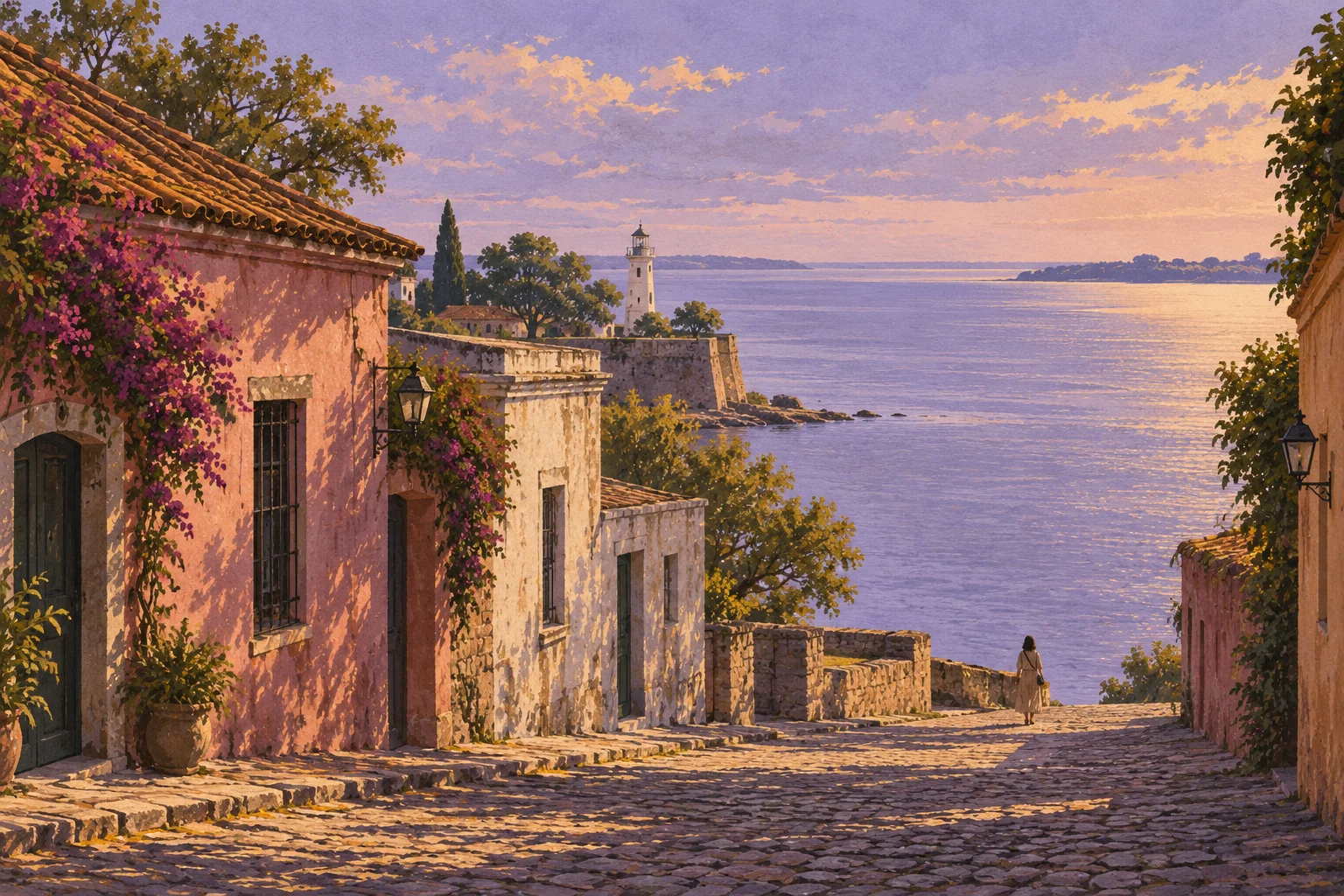
The gallery photographs are genuine Colonia views, not evidence of a POSTCARD visit or current weather. The cover is an interpretive illustration.