Kurashiki gives you a useful excuse to interrupt a fast-moving Japan itinerary: a canal district where the architecture and an art museum can carry the day without a long checklist.
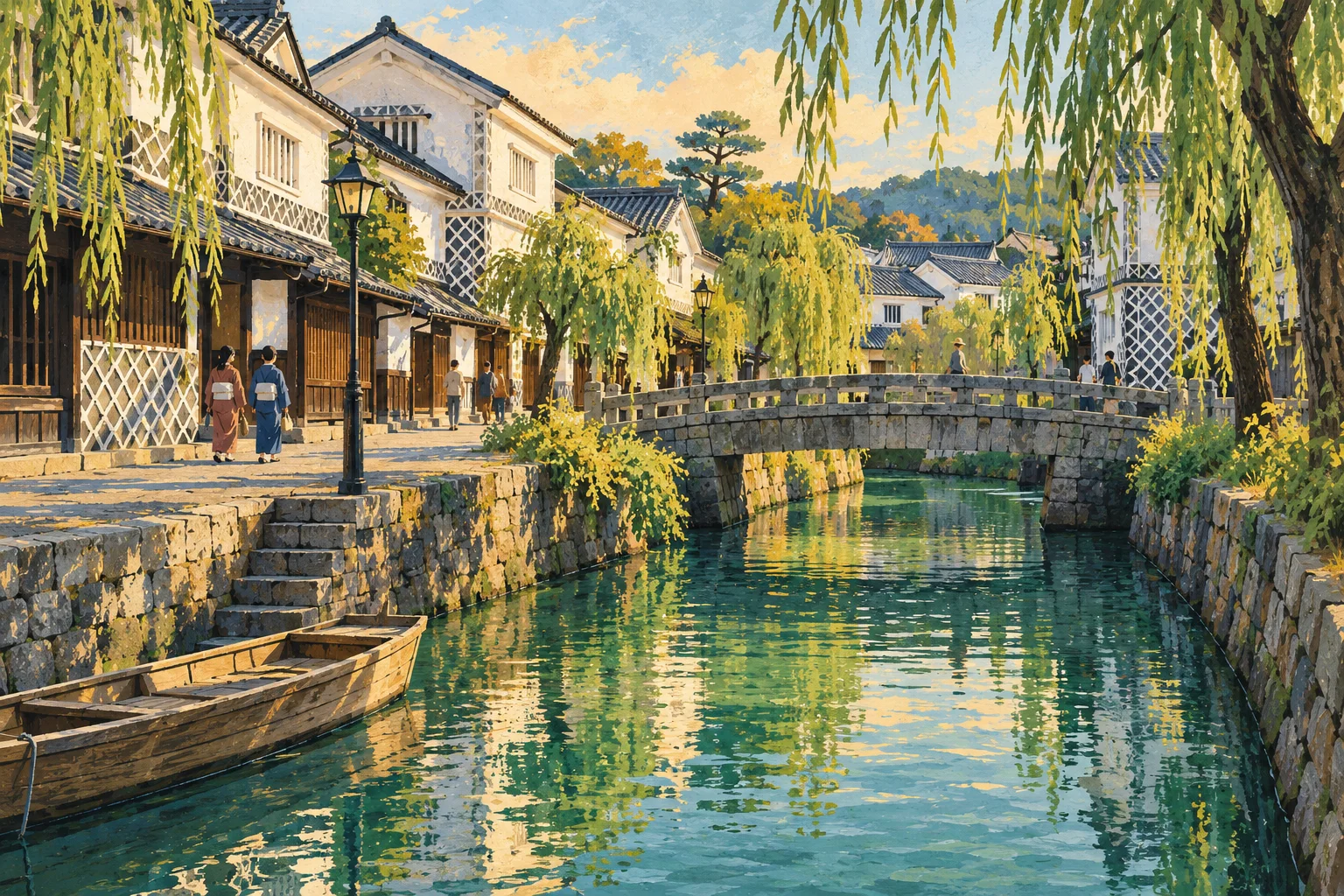
The Bikan quarter’s white storehouse walls, dark tiles and waterside willows make the first impression. The more interesting reason to linger is what those buildings do now. Japan’s national tourism organisation describes former storehouses reused as shops, museums and cafés. This is a place to enter a building and look closely, not just collect the canal photograph.
Give the museum first choice of your day
Make the Ohara Museum of Art the fixed appointment, then let the streets fill the remaining time. That order matters because the canal remains visible when a gallery door is shut.
The museum’s current visitor information lists March–November hours of 09:00–17:00, with last admission at 16:30. December–February hours shorten to 09:00–15:00, last admission 14:30. Mondays are normally closed, with public-holiday exceptions; August follows a different pattern. Check the calendar for your date rather than assuming every Monday or holiday works the same way.
Adult admission is ¥2,000 as checked on 17 October 2026. The annex remains closed. The Kojima Torajiro Memorial Hall has separate, shorter opening hours, so do not treat every building as open until the main museum closes. If a particular work is your reason for coming, check the museum’s current display information too.
Our planning suggestion is to allow a generous morning for art rather than arriving at the last-entry cutoff. A ticket buys admission; it cannot give you back the time spent rushing to get there.
Let the canal be a second act
After the museum, return to the water and choose a short wander through the adjoining lanes. Look for the changes between plaster, timber and tile rather than trying to tick off every shop. Keep doorways clear when stopping for photographs, and treat side streets as working neighbourhood space.
If you want a boat ride, the city’s visitor guide directs you to the Kurashiki-kan Tourist Information Office for tickets. Its published fare change took effect on 1 October 2026: adults ¥1,000 and eligible children ¥500, replacing the older ¥700/¥350 prices still visible in the same listing. Confirm the current operating arrangements at the desk before building the afternoon around a departure.
The office is useful even without a boat ticket: the city lists toilets, coin lockers and a drinking-water station there. Locker availability and suitability for your bag are not guaranteed, so arrange luggage storage before committing to a sightseeing stop between trains.
Arrive at Kurashiki, not just Shin-Kurashiki
JNTO places the quarter about a ten-minute walk from JR Kurashiki Station. Local Sanyo Line trains connect Kurashiki with Okayama and Shin-Kurashiki. The similar station names are worth catching before booking: reaching Shin-Kurashiki by Shinkansen does not put you beside the canal.
Check your actual rail connections and leave slack for the station walk. If this is part of a longer high-speed-rail journey, our Shinkansen luggage guide explains why measuring the case matters before choosing a seat.
A day visit or a night here?
A day visit suits travellers who want one substantial museum stop and a relaxed look at the quarter. An overnight stay makes sense if you would value an unhurried evening and a second morning, or want to avoid fitting the museum between two fixed train bookings. Neither option needs an overloaded attraction list.
For an overnight plan, compare the accommodation’s walk to both the station and the canal; use the Kurashiki stays link in Good to have handy as a starting point. The photographs here show a Kurashiki canal scene and a town lane, not a reviewed hotel or the museum interior.
Research checked 17 October 2026; this is a researched guide, not a reported visit. Review Canada’s Japan advisory and JNTO’s travel alerts before departure. Check JR West’s regional service information for your train; a live service status was not readable in our research extract, so no disruption-free journey is assumed.