The snack in your daypack deserves the same attention as the passport in its pocket. For a New Zealand arrival, make a small inventory before the suitcase closes: what you are carrying, where it is packed and what needs an official check.
This guide focuses on food and used footwear or outdoor equipment. It is not a complete list of Customs requirements, visa rules or medicine restrictions.
Start with the contents, not the form
New Zealand Customs requires declaration of risk items in both cabin and checked baggage. Its list includes all food—even packaged food—and used shoes, sports equipment and outdoor equipment. Plant, animal and wooden items also appear on that list.
Declaring is not permission to import. MPI officers decide whether an item can enter; treatment may be necessary and charged to you. If uncertain at arrival, declare the item for inspection or use the marked amnesty bins.
Our packing approach is to gather the things you need to check in one place before distributing them between bags. Open the small pockets, too. A shopping list made from memory is a poor substitute for looking inside the bag you will actually carry.
For each item you are unsure about, write down its name and where you have packed it. Keep labels with food you intend to bring: they give you something concrete to consult when checking its ingredients, rather than relying on a description such as “some snacks”.
Check used gear before deciding to bring it
Do not make a last-minute airport decision about a whole camping kit. Lay out the equipment you intend to take and check the current item-specific requirements through the official biosecurity guidance linked from Customs.
For your own packing plan, distinguish “I need this on the trip” from “this happens to live in my backpack”. The second category is where an unnecessary item can travel without much thought. Keep anything you may need to show accessible; burying it under every other possession makes your own unpacking harder.
Put the declaration on the right day
The official New Zealand Traveller Declaration guidance says the form is free. Air travellers can submit from 24 hours before starting their journey. For connecting flights without a stopover, that means the first leg. If you leave an intermediate airport with your bags, the window runs from the flight departing that stopover for New Zealand.
Each person needs a declaration, including children and babies. Have your passport, first New Zealand address, flight details and recent travel history ready.
Save the emailed reference. Changes must be resubmitted; you can update until passport control or processing by a border officer. After that, tell an officer about anything you forgot to declare. A paper form is available on arrival if needed.
Make one final pocket check
Before submitting, compare your notes with the bags in front of you. Then keep the notes useful: if somebody adds a purchase, put it on the list. For a family, choose a moment when everyone can say what they have packed rather than assuming one adult knows the contents of every backpack.
That is the practical aim here: arrive able to describe your belongings accurately. It is more useful than trying to memorise a universal list of “safe” snacks.
For a separate packing decision, see our guide to travel adapters versus voltage converters.
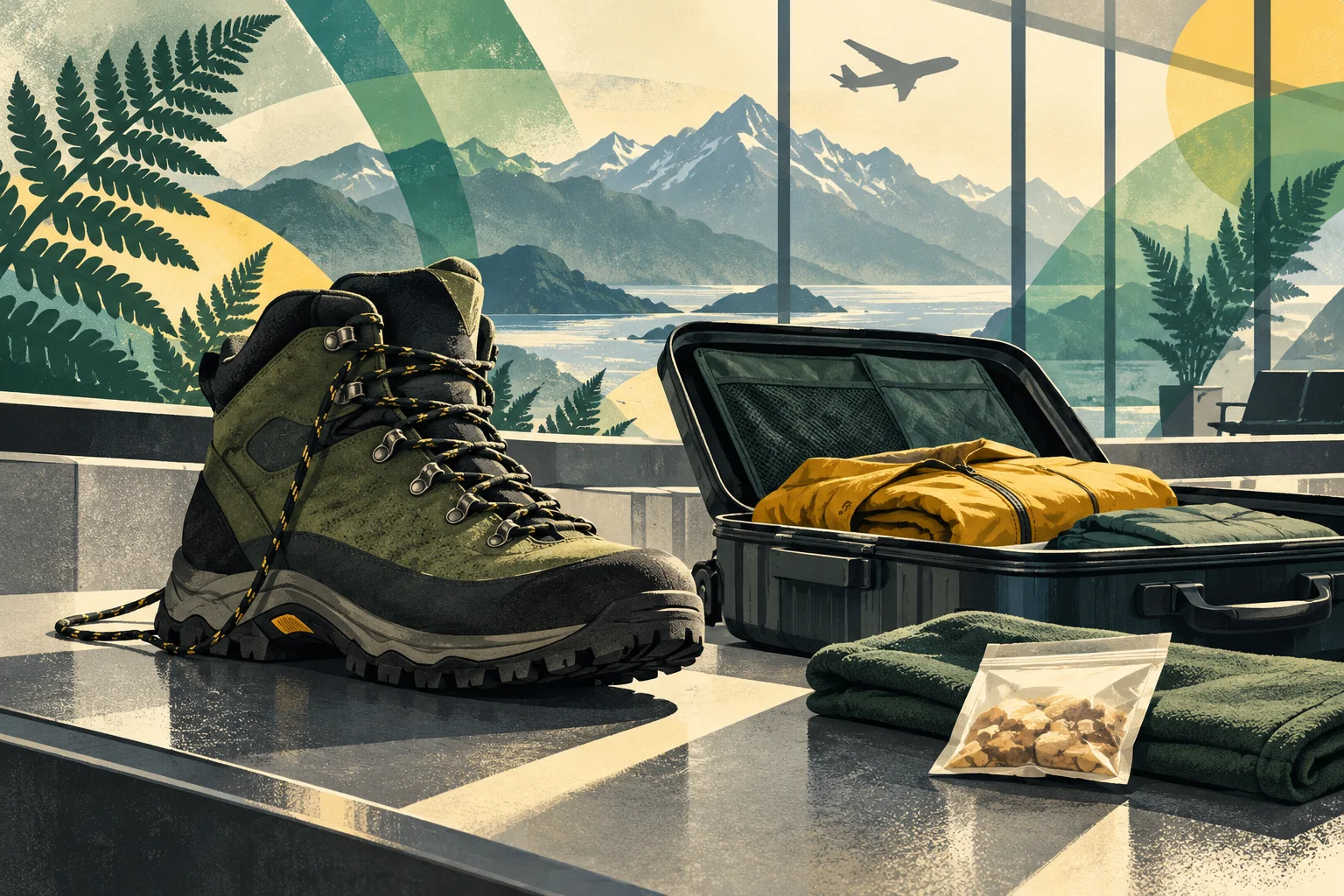
Official information checked 18 October 2026. Consult Canada’s New Zealand travel advice and your airline’s current notices when planning the wider trip. The footwear and suitcase photographs are contextual illustrations of packing, not endorsements or examples of approved goods.