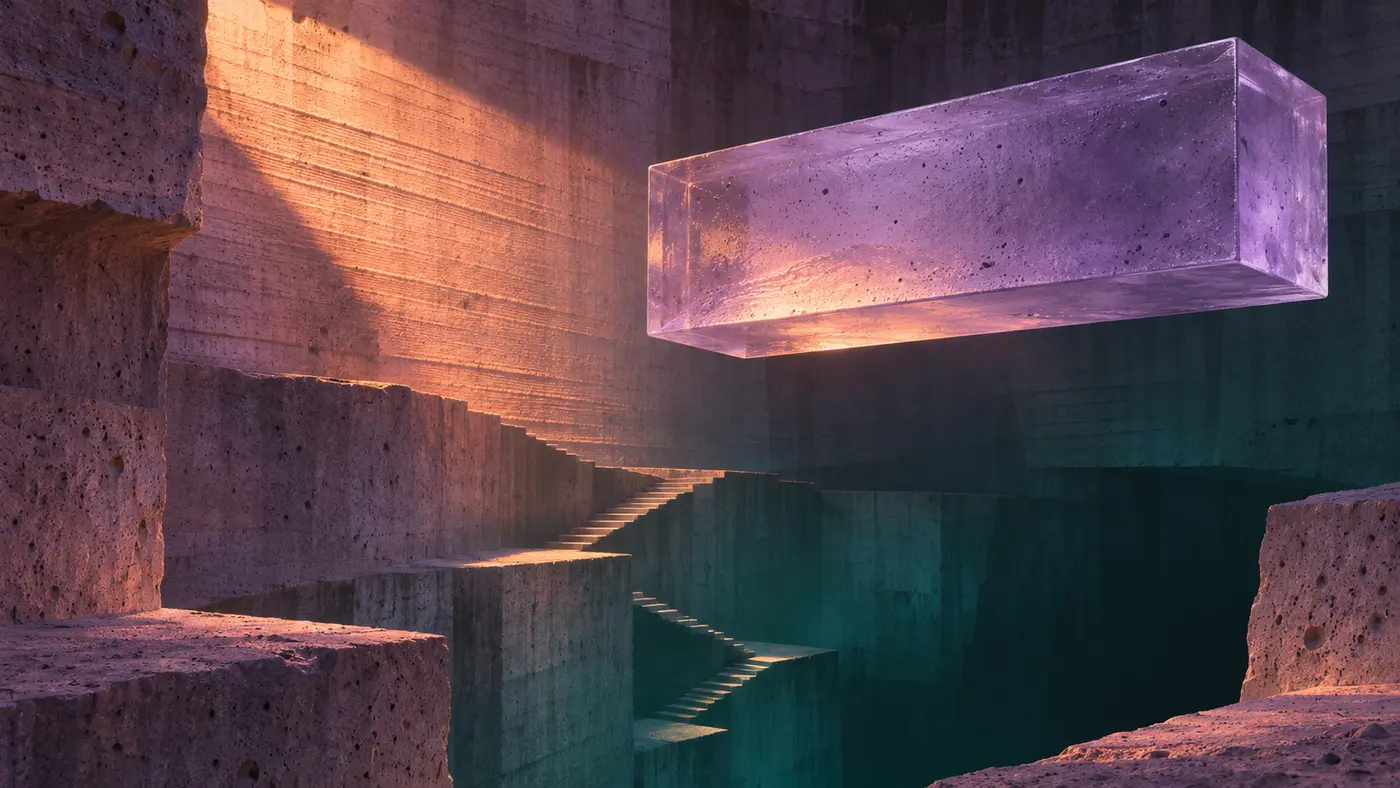
A wall made of Oya stone is easy to read up close: pale blocks, dark flecks, joints where one piece meets the next. The Oya History Museum in Utsunomiya shows you the other half of that wall. Every block that left the quarry made the room a little bigger.
The local tourism council dates the excavation to 1919–1986. Stonecutters left roughly 20,000 square metres of underground space. When you descend, look at the geometry before you look at the lighting: these chambers took their shape from what workers could cut and carry out. Later, the same cold space was used to store rice.
Read the material before you go below
Oya stone is a volcanic building stone. The Japan National Tourism Organization traces its uses from paving stones to Tokyo’s Imperial Hotel. Look at the close-up of the finished wall in the gallery: a building block is human in scale. The chambers tell you what decades of producing those blocks amounted to.
Pack a layer even if the bus ride is warm. The local tourism council gives the quarry’s year-round average as about 8°C; the museum posts the day’s interior temperature. Think of a coat as part of the visit rather than something to leave at the station.
The station exit matters
Start on the west side of JR Utsunomiya Station. JNTO directs visitors to stop 6 for the Oya/Tateiwa bus. Get off at Shiryokan-iriguchi, the museum entrance stop. Allow about half an hour on the bus plus a short walk; look up the return departure before you head underground. If you’re staying overnight, compare a room’s actual walking route to that west exit.
For a longer Japan trip, the Shinkansen luggage guide covers the Tokaido, Sanyo and Kyushu corridor. Don’t apply those corridor-specific rules to the trip north to Utsunomiya.
What your ticket buys this season
The museum’s current visitor information lists ¥1,000 adult admission, cash only. Through November the usual hours are 09:00–17:00, with last entry at 16:30. From December the usual hours shorten to 09:30–16:30, with last entry at 16:00. Winter Tuesdays and the year-end holiday have separate closure rules, so check your specific date.
Two notices are easy to misread. November’s guide notice concerns guided-visit bookings. The December works notice concerns the exhibition room: the underground quarry remains open under its usual arrangements. If the chamber is the reason for your journey, the works needn’t rule it out. If it’s the exhibits you want, check for a reopening announcement before booking.
Canada’s Japan advisory recommends normal security precautions nationally. Check the museum’s notices and local transport before departure.