We may earn a commission from purchases or bookings through the links below.
A good Willemstad walk needs more than a colour chart. In Otrobanda, give your attention to the space around a building: the gallery, the plot, the relationship between a house and the street. Those details offer a reason to linger beyond the harbour photograph.
The name means “the other side”, according to the Curaçao Tourist Board’s neighbourhood introduction. It places Otrobanda opposite Punda and dates its establishment to 1707. That geographical distinction is the starting point for this visit, not a suggestion that the neighbourhood is a lesser version of the city across the water.
What to look for beyond the painted facade
UNESCO’s account of historic Willemstad explains a useful contrast. Punda developed within defensive walls; Otrobanda had room for houses on larger plots, including residences surrounded by galleries. The city’s architecture combines Dutch precedents with regional influences and adaptations to a tropical climate. Its historic area entered the World Heritage List in 1997.
Use that context as a looking exercise. Where does the building meet the pavement? Is there an intermediate space between the street and the interior? How do windows, shade and rooflines change from one frontage to the next?
You do not need to identify every architectural period to get something from this. Compare two buildings carefully instead of collecting twenty quick photographs. Stay on public routes and treat open doors and courtyards as private unless access is clearly invited.
Leave room for the neighbourhood’s present
The tourist board credits KayaKaya and community efforts with supporting Otrobanda’s art and cultural life. Its city itinerary points visitors towards guided walks through Ser’i Otrobanda’s street art.
A guide is most useful here when you want the story behind a work. Before booking, ask whether the route discusses the artists and neighbourhood history, how long you will be outside, and where it finishes. A mural itinerary can change; do not build the day around a photograph you found years ago.
Kurá Hulanda Village is another anchor identified by the tourist board, with shops, places to eat and cultural attractions. Choose a stop that fits your interests rather than treating every doorway as a compulsory sight. Confirm individual venue hours separately.
Allow the harbour to keep working
The Queen Emma Bridge connects Punda and Otrobanda and swings aside for ships. The tourist board describes a free pedestrian ferry when the bridge opens. Check the crossing arrangements locally rather than assuming the bridge will be available at the exact minute you want it.
Our planning recommendation is to keep a booked activity and the appointment immediately after it on the same side when possible. If you must cross for a tour, transfer or ship departure, allow a margin instead of treating the walk as a fixed stopwatch calculation.
Choose a base by the walk you will repeat
For a city-focused stay, plot your accommodation and intended meeting points before comparing rooms. Compare Willemstad stays, then check the exact address and which side of the harbour it occupies. A city-wide search is not a promise that every result lies in Otrobanda.
Travelling with children? Our hotel-room layout comparison helps distinguish a shared room, confirmed connecting rooms and a suite before you book.
Plan outdoor time around the local weather service and read the current Curaçao travel advisory. Keep valuables secure and use local advice for your return route. Research checked 18 October 2026; this is a neighbourhood introduction, not a surveyed walking route or accessibility assessment.
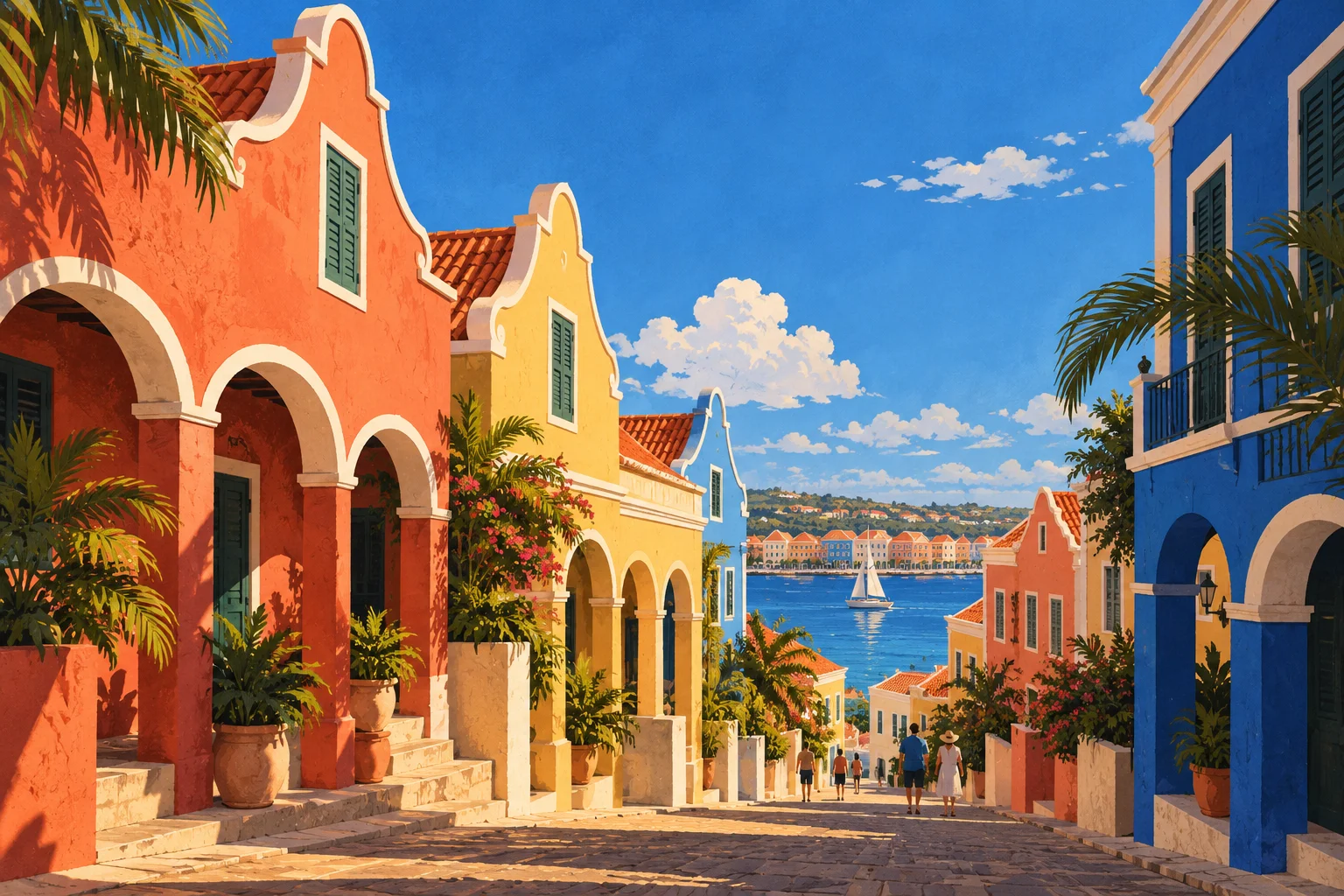
The photographs show the bridge and Punda as geographical and architectural context. The cover is a conceptual illustration, not a depiction of a specific address.