A small bottle of balsamic can be a thoughtful food gift. It can also be a confusing purchase: dark glass, old-looking lettering and a handsome box tell you surprisingly little about the production method.
Start with the complete name. Aceto Balsamico di Modena PGI and Aceto Balsamico Tradizionale di Modena PDO are distinct protected products. The word Tradizionale is doing real work.
This researched comparison covers those two Modena designations. It is not a tasting or a ranking of producers, and it does not cover every balsamic condiment or the separate traditional designation from Reggio Emilia.
PGI: grape must meets wine vinegar
The Modena PGI consortium’s production guide describes grape must combined with wine vinegar and a portion of previously aged vinegar. The must can be fermented, cooked or concentrated. A small permitted addition of caramel can stabilise the colour.
The minimum maturation period is 60 days. PGI also has Invecchiato and Riserva classifications for longer-aged products. Those remain PGI: extra time does not turn this production method into Tradizionale PDO.
For the buyer, that means PGI is a category to compare within, not a single flavour or a fixed level of sweetness. Ask the seller about the particular bottle and, where a sample is available, taste before committing. Neither the darkest colour nor the most elaborate label can choose your preferred balance for you.
Tradizionale PDO: cooked must and a much longer wait
The traditional Modena specification sets a different starting point: local grape must, cooked and then fermented and aged. Its maturation and ageing process takes at least 12 years. The Extravecchio designation requires at least 25 years.
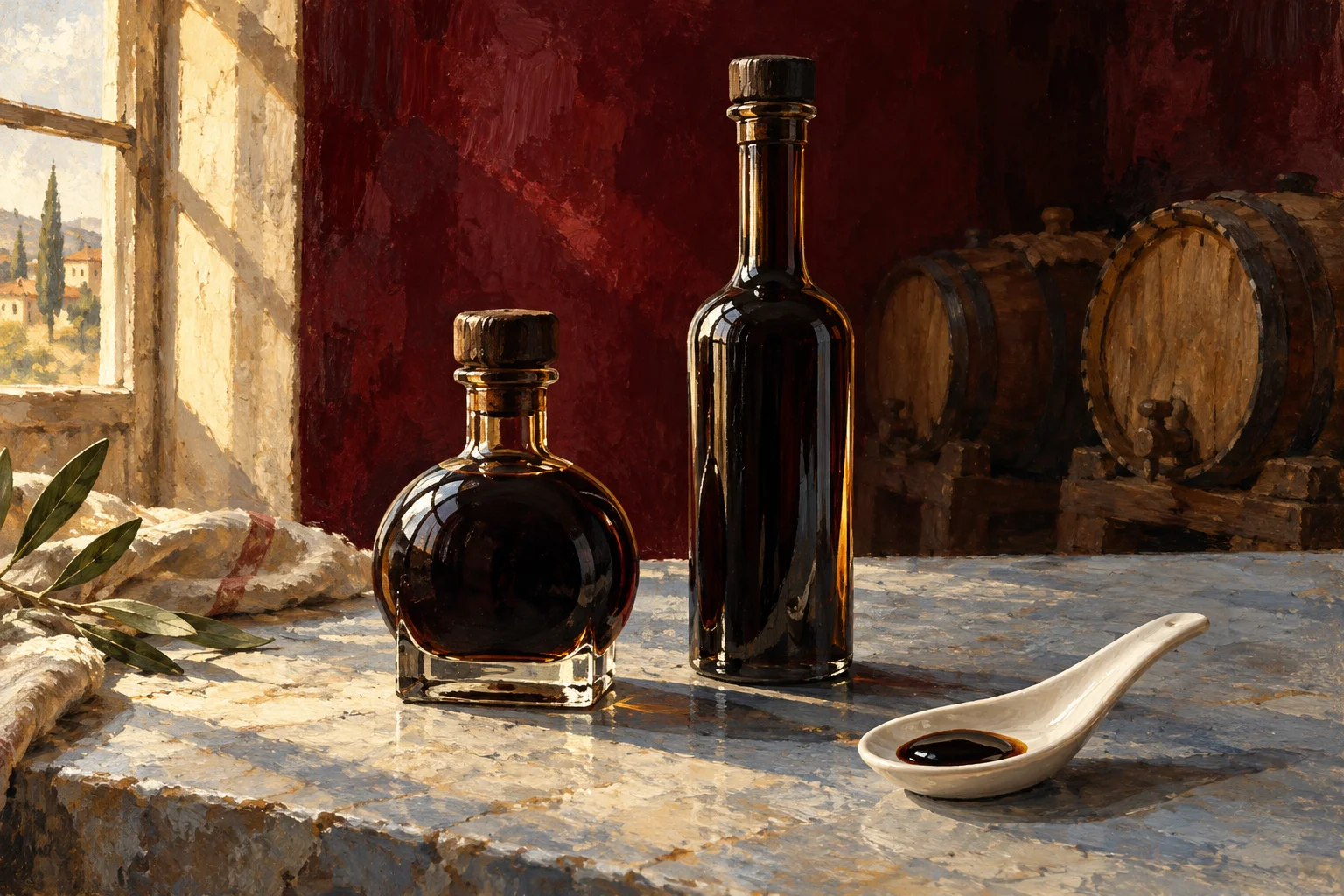
The specification also governs the glass bottle’s distinctive spherical body and rectangular base, and requires a numbered, non-reusable seal. Read the full designation and inspect the seal together. Bottle shape alone is a poor substitute for those checks.
If you are buying a gift, write down the exact designation on the receipt or accompanying note. That is more useful to the recipient than an unsupported description such as “very old balsamic”.
A barrel’s age is not the vinegar’s age
A story about a century-old barrel can be fascinating. It should not become a claim that the bottle contains hundred-year-old vinegar.
The traditional consortium’s FAQ makes this distinction explicitly: barrels can be much older than the product’s recognised ageing categories. When a seller mentions a grand number, ask what it describes—the vinegar, the vessel or the family business.
That question is especially useful with gifts. You want to explain what you bought accurately, without turning the producer’s history into a vintage claim.
Decide how you will use it
The traditional consortium suggests tasting small amounts on their own and using a few drops as a finishing touch on foods such as mature cheese or fruit. If that is the experience you want, investigate Tradizionale PDO and compare actual bottle prices and sizes.
If your intention is a larger-quantity kitchen staple, start by comparing PGI options against your budget and the flavour you enjoy. This is an editorial shopping approach, not a claim that every PGI is inexpensive or that every PDO will suit every palate.
Put two questions to the seller: What is the complete designation? How would you use this particular bottle? Then compare price per volume as well as the total spend. A smaller purchase you understand is easier to enjoy than an impressive box you are afraid to open.
For the other half of the pantry shelf, our olive-oil buying guide explains why harvest information, production origin and packaging answer different questions.
Sources checked 26 October 2026. No individual product was tasted, tested or selected for purchase.
Photograph notes
The traditional bottle photograph is credited to Balsamico1 / Consortium Producers Traditional Balsamic Vinegar of Modena, from a 2010 public-domain release. It illustrates historical packaging, not a current product offer.
The pouring photograph is by Andrea Levers, under CC BY-SA 2.0. Its exact designation is not established, so it is general balsamic context. Both photographs have been resized or converted to WebP; the pouring image retains its licence. The unlabelled bottles on the illustrated cover are conceptual.